

How to Write a Construction Project Schedule That the Crew Actually Follows
You hand the foreman a schedule on Monday morning and by Wednesday it's buried under a takeoff sheet in the truck. Sound familiar? Most construction schedules fail not because the timeline was wrong, but because the people doing the work had no real input in building it. If you are a GC or specialty trade contractor running jobs in New York, New Jersey, or Connecticut, you already know that a schedule nobody follows is just paper.
The gap between a schedule that looks good in the office and one that actually drives field execution comes down to a few fixable problems. Crews ignore schedules that are too vague, too rigid, or built without accounting for how work actually flows on a job site. This article breaks down how to fix that, step by step.
Table of Contents
- Why Most Construction Schedules Fail Before the Job Starts
- How to Structure Your Schedule Around the Work, Not the Calendar
- Getting Your Crew to Actually Buy Into the Schedule
- Managing Schedule Drift Before It Kills Your Margin
- Using Software and Tools Without Overcomplicating It
- Northeast Market: Scheduling Realities for NY, NJ, and CT Contractors
- FAQ
Why Most Construction Schedules Fail Before the Job Starts
Most project schedules are built backwards. The PM starts from the owner's completion date and works backward, filling in activity durations based on gut feel or whatever the last similar job looked like. The problem is that this approach bakes in assumptions that have nothing to do with this specific job, this specific crew, or the actual sequence of work required.
A schedule built that way will always fight reality. When the first activity runs two days long because nobody accounted for site access or material lead time, every downstream task shifts and the whole document becomes fiction. The crew stops trusting it, and they start working off verbal instructions instead.
The fix starts before you open any scheduling software. You need to walk the job mentally from start to finish, identify every dependency, and get accurate duration estimates from the people who will actually do the work. That single habit separates schedules that get followed from schedules that get ignored.

Before building any schedule, do a thirty-minute walkthrough with your foreman and list every predecessor activity for your three biggest scope items. You will catch two or three missing dependencies every single time.
How to Structure Your Schedule Around the Work, Not the Calendar
The most useful construction schedules are built around phases of work, not dates. Start by breaking the job into logical phases: site prep, foundation, rough framing, MEP rough-in, inspections, finishes, and closeout. Within each phase, list specific activities with real durations that your crew can hold themselves accountable to.
Activity durations need to be grounded in productivity rates, not optimism. If your framing crew typically installs 800 square feet of exterior wall per day with a four-person crew, that is your number. Do not schedule 1,200 square feet per day because you want to hit a deadline. That approach will blow your schedule by day three and cost you in overtime and crew frustration.
Critical path is the concept that matters most here. Identify which sequence of activities, if delayed, will push your project end date. Those activities need the most buffer, the most monitoring, and the most clear ownership. Everything off the critical path can absorb some float without hurting your completion date.

Contractors frequently assign activity durations in round numbers, like five days or ten days, without any actual production rate math behind them, which makes every duration a guess rather than a target.
Getting Your Crew to Actually Buy Into the Schedule
Here is the piece most project managers skip. If your foreman, lead carpenter, or trade sub did not have any input in the schedule, they have zero ownership over it. You can print it on laminated sheets and post it in the job trailer, and it still will not drive behavior. People follow plans they helped create.
The practical way to do this is a pre-construction schedule review meeting, even if it only takes an hour. Bring your foreman and any major subs into the same room before mobilization. Walk through each phase, confirm durations, flag conflicts, and let them push back. When a sub tells you that your three-day duration for rough electrical is actually five days given the panel locations on this particular job, write it down and adjust the schedule. That conversation before the job starts saves you a week of chaos during it.
Crew communication also means putting the schedule in a format they can actually read on site. A fifty-activity Gantt chart printed on legal paper is not useful to a framing carpenter. A one-page weekly look-ahead with today's tasks, tomorrow's tasks, and what needs to be ready for the next crew to start is what drives daily execution. Both documents serve different audiences, and you need both.
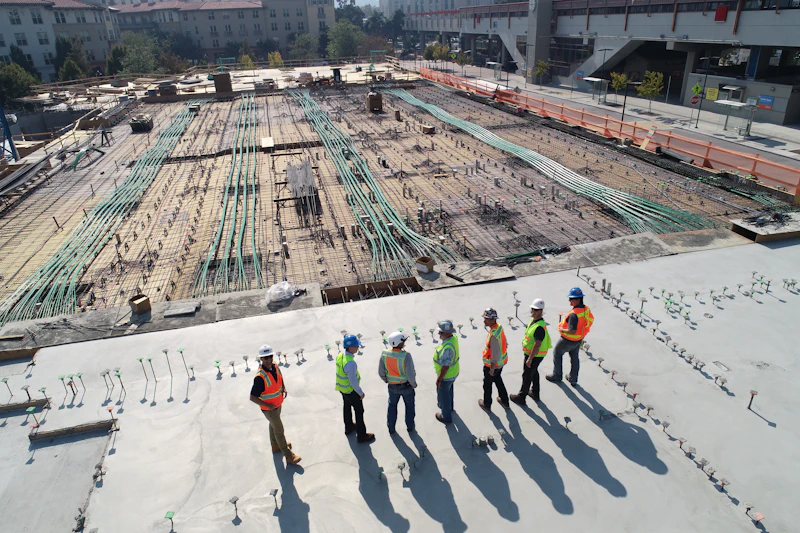
A one-hour pre-construction schedule meeting with your key subs typically prevents two to three days of crew downtime caused by sequencing conflicts, which at prevailing Northeast labor rates can save you four to eight thousand dollars on a mid-size job.
Managing Schedule Drift Before It Kills Your Margin
Schedule drift is the slow bleed. No single day blows up the job. Instead, Monday runs thirty minutes long, Tuesday loses time to a material delivery that showed up late, Wednesday the inspector does not pass the rough plumbing and the tile crew is already mobilized. By Friday you are five days behind a schedule that said you would be done in three weeks.
The only way to catch drift before it compounds is a daily or twice-weekly field check against the schedule. This does not need to be a formal meeting. It is a five-minute conversation between the superintendent and the foreman: are we where we said we would be, and if not, why. Document the variance and the cause. This data is worth its weight over time because you will start seeing patterns, and patterns are fixable.
Earned value concepts apply even to small jobs. If you planned to have rough framing complete at the end of week two and you are only sixty percent done, you can quantify that immediately and decide whether to add labor, extend hours, or compress a later activity. The contractors who maintain margin in the Northeast are almost always the ones who are doing this math in real time, not at the end of the job when it is too late.

Keep a running variance log in a simple spreadsheet, one row per day, noting planned percent complete versus actual percent complete and the cause of any gap. After three jobs you will have a reliable correction factor for your own crew's productivity.
Using Software and Tools Without Overcomplicating It
There is a version of scheduling software that requires a full-time scheduler to maintain and a training course to understand. That is not what most GCs and specialty trades in the $500K to $10M project range need. What you need is a tool that lets you build a clear sequence, assign ownership, and update progress without it becoming a part-time job.
Microsoft Project is still the industry workhorse for Gantt-based scheduling, but it has a learning curve and the file-sharing workflow can get messy on active jobs. Simpler tools like Buildertrend, CoConstruct, or even a well-structured spreadsheet can serve small to mid-size contractors better because the whole team will actually use them. The best scheduling tool is the one your foreman will open on his phone at seven in the morning.
Job costing software and scheduling software should be talking to each other, even if informally. When you see that an activity is running long, you need to know immediately what that means for your labor cost on that work item. If you are tracking your estimated versus actual hours by phase in your job cost software, a schedule delay triggers an automatic cost review. That connection between time and money is where most contractors have a blind spot.
Contractors often build a detailed schedule in software and then never update it after week one, which means the schedule becomes a historical artifact rather than a live management tool that the crew can use.
Northeast Market: Scheduling Realities for NY, NJ, and CT Contractors
Working in the Northeast means scheduling against a set of constraints that contractors in other parts of the country do not deal with to the same degree. Union jurisdictions, prevailing wage requirements, and dense urban site conditions all affect how you sequence work and how much time you assign to each activity. In New York City, a work day that starts at seven and ends at three-thirty is a reality you build the schedule around, not an obstacle you work around.
Labor costs in the Northeast are among the highest in the country. In New York City and Westchester County, union carpenters, electricians, and ironworkers regularly bill out at $90 to $130 per hour in loaded labor cost. In northern New Jersey, rates are comparable, with some trades running even higher due to local agreement structures. This means every day of schedule delay has a real dollar cost that is two to three times higher than it would be in a lower-cost market. A one-week slip on a framing package in the Bronx might cost you $25,000 or more in unplanned labor. Getting the schedule right is a direct profit protection measure in this market.
Material lead times in the Northeast, particularly in urban markets, require longer procurement windows built directly into your schedule. Concrete and masonry block in New York City can run two to three weeks on lead time during peak season. Structural steel fabrication for mid-size commercial jobs in New Jersey routinely runs eight to twelve weeks. If these lead times are not accounted for in your schedule from day one, you will have crews standing by waiting for material and eating into your contingency fast.
Licensing and inspection timelines are another Northeast-specific reality that catches contractors off guard. New York City DOB inspection wait times can run several days for standard rough inspections, and that window can stretch during busy periods or when re-inspection is required. In New Jersey, municipal inspections vary widely by township, and some rural jurisdictions have inspectors who only work part-time or cover multiple towns. Connecticut has its own building official structure that can create similar variability in inspection turnaround. Every one of these inspection points is a hard stop in your schedule that needs a built-in buffer of at least one to two business days.
Connecticut and Westchester County markets also deal with seasonal constraints that affect scheduling more than contractors from other regions expect. Winter concrete work, frost depth requirements for foundation work from November through March, and the impact of Northeast winters on exterior envelope work all need to be factored into your schedule with real duration buffers. A slab pour that works in two days in September may need four days of prep and curing management in January if it can happen at all.
FAQ
How long does it take to build a realistic schedule for a mid-size commercial job? For a job in the $500K to $2M range, a properly built schedule with crew input should take three to five hours to draft and refine. If you are spending fifteen minutes on it, you are not getting deep enough into the activity dependencies to make it useful.
What is the right level of detail for a construction schedule? You want enough detail that any activity on the schedule has one clear owner and a measurable completion point, but not so much detail that updating it takes more time than running the job. For most jobs, activities that range from one day to two weeks are about the right grain.
Should I share the schedule directly with my subs? Yes, but give them the look-ahead view, not your full master schedule. Share the three to four week rolling look-ahead so they can plan their labor and material accordingly. Reserve the full master schedule for your superintendent and project manager conversations.
How do I handle schedule changes without losing control of the document? Number your schedule revisions and date every update. When you make a change, note why in a revision log, whether it was owner-directed, weather, sub delay, or something else. This protects you in claims situations and gives you a clean record of what happened and when.
What is the biggest scheduling mistake that hurts profit on Northeast jobs specifically? Not building inspection wait time into the schedule is the one that kills the most jobs in this market. Contractors assume same-day or next-day inspections and plan their sequence around that. When an inspection takes four days in New York City or gets pushed by a part-time inspector in Connecticut, the whole downstream sequence shifts and the crew ends up waiting.
Job Profit Pro helps contractors track job costs and margins in real time, before the job is finished. See how it works