

Cash Flow Management for Contractors: How to Keep Money Moving and Never Miss Payroll
You made payroll last Friday. But it was close. Too close. You had to float $18,000 from your personal savings account for three days because a GC on a commercial job in Hoboken sat on your invoice for 47 days, and your masonry supplier needed payment or they were pulling your account. That is not a cash flow problem. That is a survival problem, and it is happening to good contractors every single week.
Most contractors who go out of business are not failing because they lack work. They are failing because they cannot bridge the gap between when money goes out and when money comes in. The job is profitable on paper, and the company is broke in the bank.
This guide covers the specific moves, systems, and habits that keep cash moving through a construction business. No theory. Just what actually works.
Table of Contents
- Why Construction Cash Flow Is Different From Every Other Business
- The Billing Cycle Problem and How to Fix It
- How to Build a 13-Week Cash Flow Forecast
- Getting Paid Faster Without Ruining Client Relationships
- Managing Subcontractors and Supplier Payments
- Northeast Market: NY, NJ, and CT Specific Realities
- FAQ
Why Construction Cash Flow Is Different From Every Other Business
A restaurant owner collects cash the same day they deliver the product. A software company bills monthly and gets paid by credit card instantly. A contractor front-loads labor, materials, equipment, and insurance for weeks or months before seeing a single dollar back from a client. The payment lag is baked into the business model, and that makes construction uniquely dangerous from a cash perspective.
On top of the lag, the dollar amounts are huge relative to the size of most small contracting businesses. A $400,000 kitchen renovation project can put $60,000 to $80,000 of cash out the door before the first draw request is even submitted. If that draw gets kicked back for a missing lien waiver or a paperwork issue, you are floating that money for another 30 days with no notice and no warning.
The contractors who survive long-term are not necessarily the ones with the best crews or the lowest bids. They are the ones who understand that job management and money management are the same job.

Calculate the average days between when you first mobilize on a job and when you receive your first payment, then make sure your credit line covers that exact window on every new project.
The Billing Cycle Problem and How to Fix It
Most contractors bill once a month. They finish a billing period, compile their AIA G702/G703 or a simple invoice, send it out, and wait. The problem is that once-a-month billing puts you on a 30 to 60 day payment cycle by default, and that assumes the GC or owner pays on time. When they do not, and in the Northeast they frequently do not, you are looking at 60 to 90 days between doing the work and seeing the money.
The fix starts before you sign the contract. Your payment terms need to be negotiated the same way your price is negotiated. Ask for a mobilization payment, also called a startup deposit, on every single job. Ask for payment cycles tied to completion milestones rather than calendar months. Ask for a 15-day payment window instead of 30, and push for 10 days where you can get it.
Residential contractors have more leverage here than commercial subs, because homeowners are not operating under the same institutional constraints as a GC on a public project. Use that leverage. A $15,000 mobilization deposit on a $120,000 bathroom and kitchen remodel is reasonable and normal, and any homeowner who balks at it before the work even starts is showing you something important about how they will behave when an invoice is due.
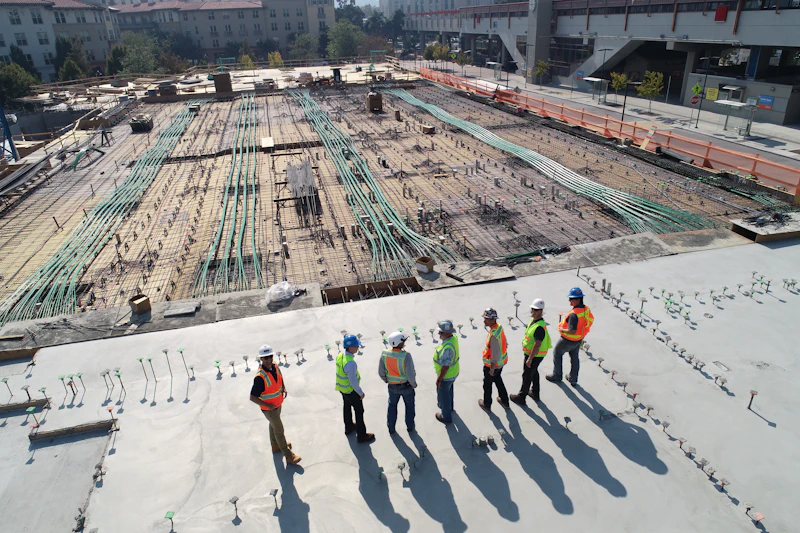
Contractors routinely submit their draw requests without attaching the required lien waivers, certified payroll reports, or compliance documents upfront, which gives GCs and owners a legitimate reason to delay payment by weeks.
How to Build a 13-Week Cash Flow Forecast
A 13-week cash flow forecast is the single most important financial tool a contractor can have. It is not complicated. It is a spreadsheet that shows, week by week, every dollar you expect to receive and every dollar you expect to pay out over the next three months. The goal is to see cash shortfalls before they happen, not after.
Start with cash coming in. Pull every open invoice, every draw request you plan to submit, every deposit you are owed, and every new contract you expect to sign. Assign each one a realistic payment date, not the contract terms date but the actual date you expect to see money in the account based on how that client pays. Then list every outgoing payment: payroll, subcontractor invoices, supplier accounts, equipment payments, insurance, taxes, and overhead. Map both columns week by week.
Where you see a negative balance in any given week, that is a problem you need to solve in advance. Your options are to accelerate an incoming payment, delay an outgoing one, draw on a line of credit, or reduce cost. The forecast gives you four to eight weeks of lead time to make those moves. Without it, you find out about the shortfall the Wednesday before payday.

Review and update your 13-week forecast every Monday morning before you do anything else, because a forecast you only update once a month is nearly useless for catching near-term cash problems.
Getting Paid Faster Without Ruining Client Relationships
There is a persistent myth in construction that pushing for faster payment will damage your client relationships. In reality, clear, professional payment expectations set at the start of a project actually reduce relationship friction, because both sides know the rules from day one. Vague payment terms create more conflict than firm ones.
Several specific tactics move the needle on payment speed. First, submit your invoices with everything attached and correct on the first attempt. An invoice that goes out clean and complete has nothing to dispute or kick back. Second, follow up on every invoice with a personal phone call or text three days before the due date. Do not wait until the payment is late. Third, offer a small early payment discount on large invoices, typically one to two percent for payment within ten days. A two percent discount on a $50,000 invoice costs you $1,000, but it might get you paid 20 days faster, which is worth considerably more than $1,000 when you are carrying payroll.
On commercial projects where you are working under a GC, understand the pay-when-paid clause in your subcontract and know your rights under New York, New Jersey, or Connecticut prompt payment statutes. In New York, for example, the Prompt Payment Act gives contractors and subs specific rights on private commercial projects, including the right to charge interest on late payments. Know those rights and do not be afraid to mention them professionally in a payment conversation.

Attach your next scheduled draw amount and due date to every invoice you submit, so the client or GC can see exactly what is coming and cannot claim they were surprised by the billing pace.
Managing Subcontractors and Supplier Payments
Your cash flow does not exist in isolation. It is directly connected to how you manage what you owe to subs and suppliers, and that relationship runs in both directions. Pay your subs consistently and on time, and you will have better subs, better pricing, and crews that actually show up when you need them. Pay late or unpredictably, and you will pay more for everything and struggle to attract reliable trade partners.
That said, you cannot pay out faster than you are getting paid in. The standard in commercial construction is that a GC pays subs within seven to ten days of receiving a payment from the owner. In practice this often stretches to 15 to 21 days, but anything beyond 30 days is a problem. If your subs are on 30-day payment terms with you and you are on 60-day payment terms with the GC, you will always be short. Align your subcontract payment terms with your prime contract payment terms.
Supplier accounts are often the most flexible piece of the puzzle. Most material suppliers in the Northeast offer 30-day net terms, and many will extend to 45 or 60 days for customers with a solid track record. Do not wait until you are in trouble to have that conversation. Call your rep in a good month and ask about extended terms as a standing arrangement. Keep that credit available as a buffer, and do not use it to fund jobs where the margins do not support the carrying cost.
Contractors often pay all their subcontractors and supplier invoices immediately upon receipt regardless of cash position, which depletes working capital and leaves nothing in reserve for the following week's payroll and overhead.
Northeast Market: NY, NJ, and CT Specific Realities
The Northeast is one of the highest-cost construction markets in the country, and that affects cash flow in ways that do not apply in other regions. Union labor rates in New York City and the surrounding metro area are among the highest in the nation. A journeyman electrician in New York City through IBEW Local 3 earns over $65 per hour in base wages, with total package costs often exceeding $100 per hour when fringe benefits and employer contributions are included. Even in non-union shops, prevailing wage requirements on public and certain publicly assisted projects drive labor costs to similar levels. This means your weekly payroll exposure on a mid-size job is enormous relative to what a contractor in a lower-cost market would face.
Material costs in the region compound the problem. Concrete, lumber, steel, and specialty materials all carry Northeast premiums driven by transportation costs, limited local production, and high demand from a dense, constantly active construction market. A concrete pour that might cost $18,000 in the Carolinas can run $30,000 or more in Westchester County or Hudson County, New Jersey. These cost levels mean that your upfront cash requirement before the first billing cycle closes is substantially higher than national averages suggest.
Licensing and compliance requirements in New York, New Jersey, and Connecticut also create cash flow timing issues that contractors underestimate. Home improvement contractor licenses, lead-safe certification requirements, NYC DOB registrations, and contractor bonding requirements all require upfront cash and periodic renewal payments. New Jersey's contractor registration system and Connecticut's Home Improvement Contractor registration both carry fees and insurance thresholds that affect your operating costs. Lien law compliance in all three states is non-negotiable. New York's mechanics lien law requires preliminary notice in certain situations and has strict filing deadlines. In Connecticut, you must file a mechanic's lien within 90 days of last furnishing labor or materials. Missing these deadlines eliminates your most powerful collection tool on a non-paying client.
The seasonal reality in the Northeast also creates predictable cash flow cycles that you need to plan for every year. December and January are slow billing months because project activity drops, inspections back up, and GCs and owners slow-walk end-of-year payments. March and April are typically high-demand, high-billings months as projects ramp up for the construction season. Build a cash reserve in your peak months specifically to cover the January and February gap, because every year that gap will come and it will be exactly as painful as you expect if you have not prepared for it.
FAQ
How much cash reserve should a small contractor keep in the bank at all times? Most financial advisors suggest three months of operating expenses as a reserve for small businesses. For contractors specifically, aim for enough cash to cover one full payroll cycle plus your largest outstanding supplier invoice, which in most Northeast shops means $40,000 to $100,000 depending on your volume.
What is the best way to handle a GC who is consistently paying 60 to 90 days late? Start by sending a formal written notice referencing the prompt payment provisions in your subcontract and, where applicable, state prompt payment statutes. If payment is past 60 days with no resolution, consult a construction attorney before filing a mechanic's lien, because the filing process and deadlines vary by project type and state in the Northeast.
Should I use a line of credit to cover payroll gaps? Yes, a business line of credit is one of the most important financial tools a contractor can have, but only if it is used as a bridge for identified, short-term gaps and repaid immediately when the corresponding payment arrives. Using a credit line to paper over chronic cash shortfalls caused by bad billing practices or low-margin work is a path toward serious financial trouble.
My jobs are profitable but I am always broke. What is going wrong? This is almost always a billing timing problem combined with overhead costs that are higher than the jobs can support. Run your actual job costs against your estimated costs on every completed project and look for where the margin is disappearing. Then look at your billing cycle and measure how many days you are sitting on unbilled work.
Do I need construction-specific accounting software or will QuickBooks work? QuickBooks handles general accounting well but does not track job-level cost and profit in real time the way construction-specific tools do. If you are running more than three or four concurrent jobs, you need a system that shows you job cost, billing status, and margin by project, not just overall bank account balance and general ledger entries.
Job Profit Pro helps contractors track job costs and margins in real time, before the job is finished. See how it works